For families moving to Japan
Life in Japan can be so much fun! Don't worry, let's just talk.
Before you move,
you already have someone on your side in Japan.
From your first Japanese lesson to preparing for the move, and on until your child feels at home in a Japanese school. After many years of teaching in Japanese elementary schools, I know what your child will meet there, and I will be with your family through each step.
Let's talk! (free 30 min) A trial Japanese lesson, a talk about your move, or both, in one relaxed 30 minutes.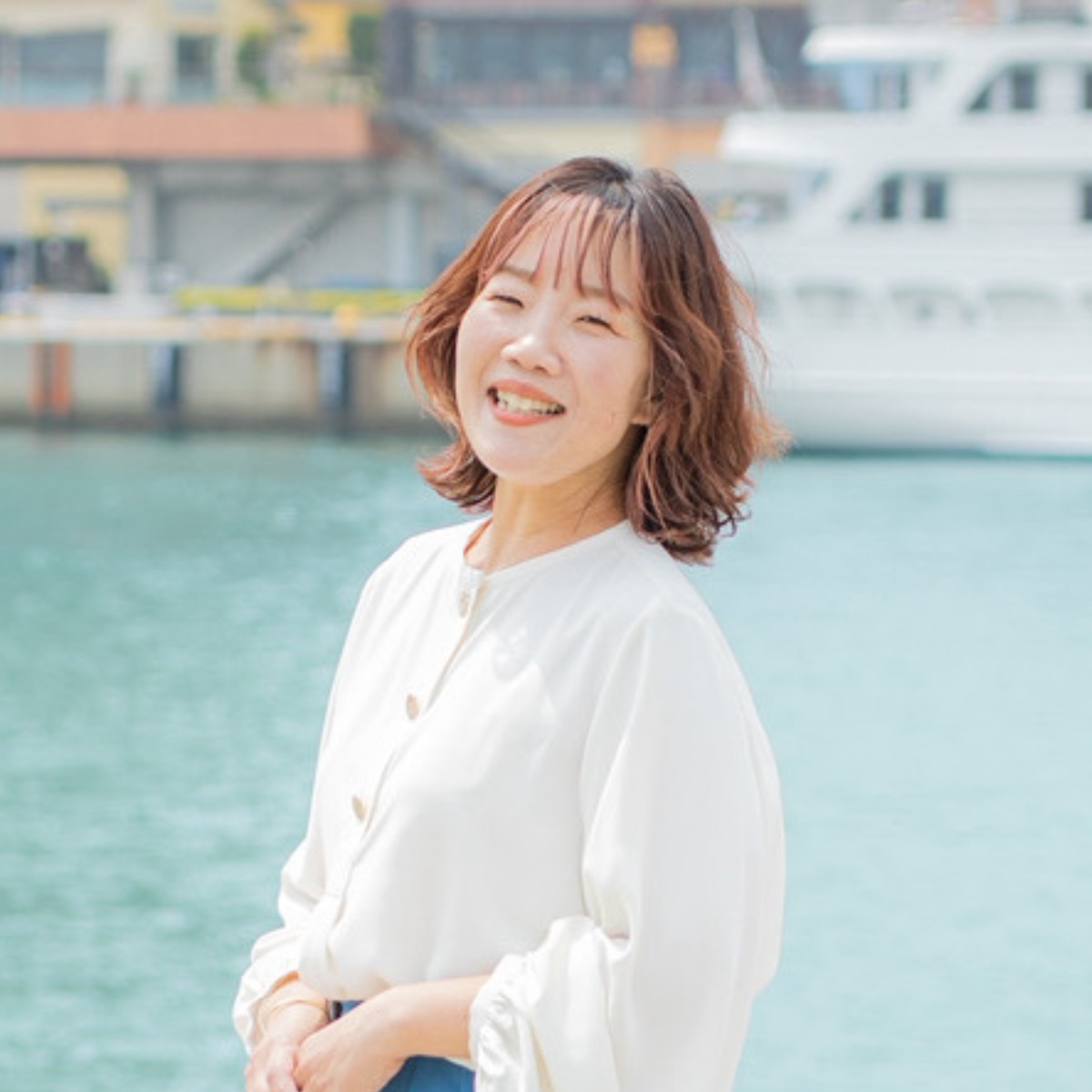
Words your child will meet in a Japanese school
- ランドセルrandoseruschool backpack
- きゅうしょくkyūshokuschool lunch
- うわばきuwabakiindoor shoes
- いただきますitadakimasulet's eat!
- ともだちtomodachifriend
- うんどうかいundōkaisports day
- そうじsōjicleaning time
- れんらくちょうrenrakuchōcontact notebook
- えんそくensokuschool trip
- おはようohayōgood morning
Do any of these sound familiar?
What families often share with me before a move
"I worry whether my child will fit in at a Japanese school."
"Neither my child nor I feel confident in Japanese yet."
"We don't know which town would be good for raising children."
"What should we prepare, and by when?"
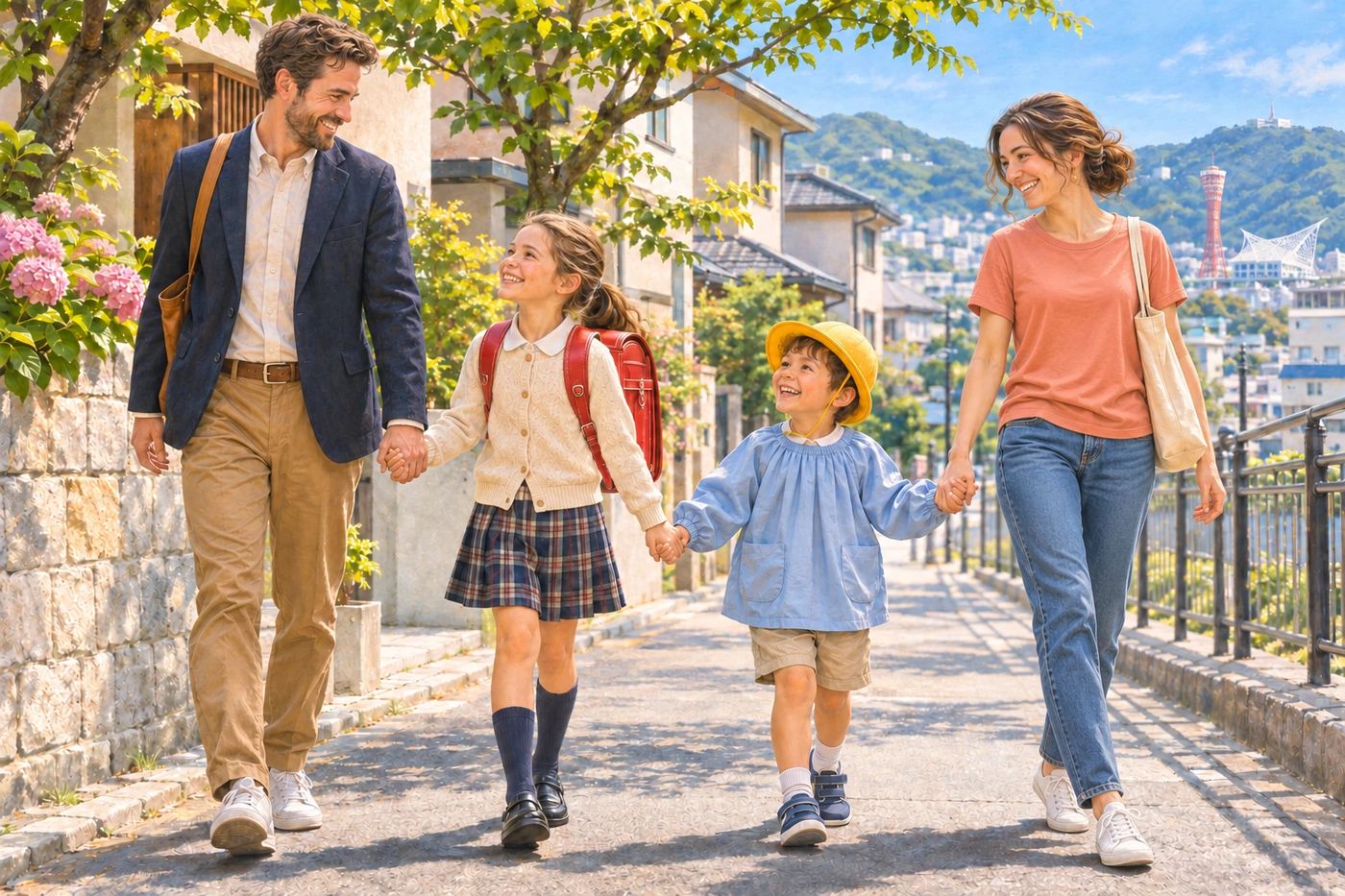
Let's turn those worries into the calm of knowing what to prepare. I'd love to hear your story first.
Book a free consultationAbout me
Nice to meet you. I'm Haruka Nakai.
I have spent about 23 years with children in Japanese elementary schools, and I still work in a school today as a learning-support teacher. Morning meetings, school lunch, cleaning time, the contact notebook: I know daily life in a Japanese classroom from the inside.
Through my online Japanese lessons, I have taught about 40 students around the world. This autumn, a child with international roots, whose first language is not Japanese, passed the entrance exam for a private elementary school in Japan.
As a mother of a young child myself, I understand the worries parents carry, and I'm here to share them with you.
Students often describe me as patient and easy to talk to, and I treasure the joy we share in each lesson. I was born and raised in Kobe, a city between the sea and the mountains.

From Kobe, a port city between the sea and the mountains,
I welcome families from all over the world.
How I support your family
Three steps, from before your move to after
The first step
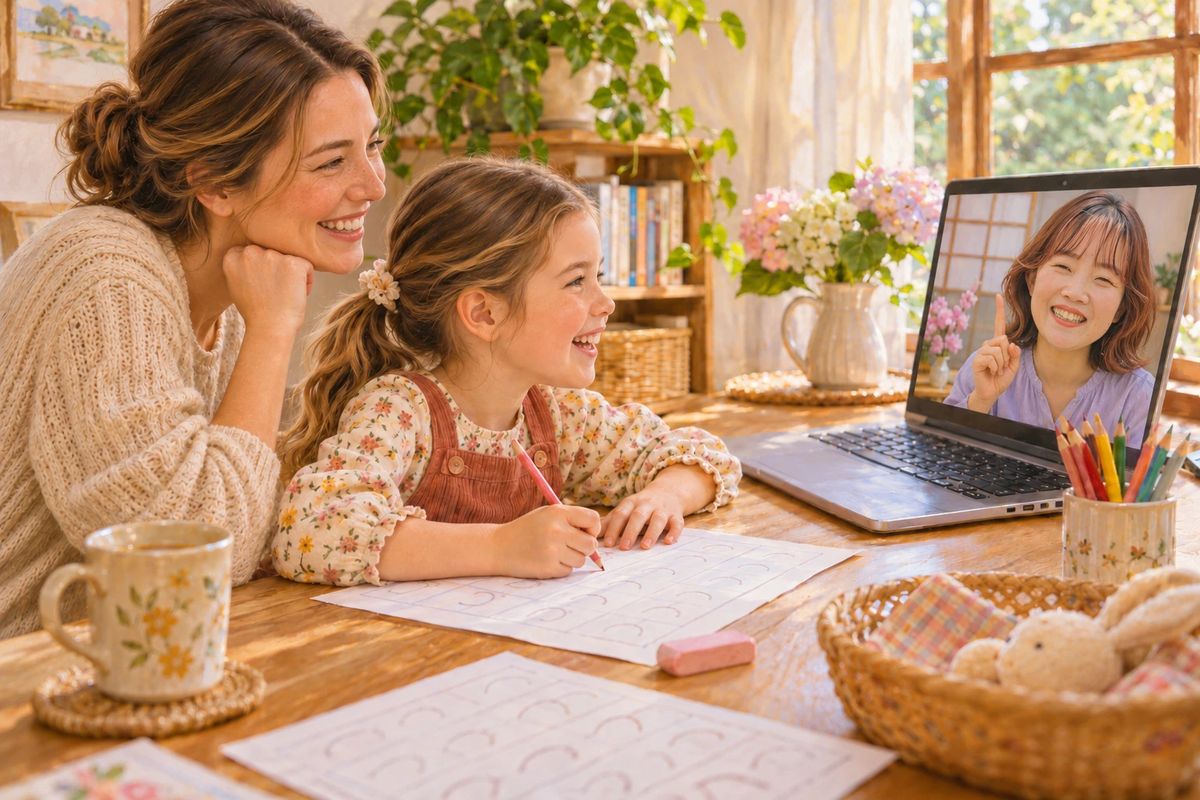
Japanese lessons: getting to know each other
Online lessons, planned around each learner's level and goals.
Parent and child together
Learn side by side, and bring Japanese into everyday family life.
Parent and child separately
Each of you learns at your own pace, for your own needs.
- For children: talking at school, playing with friends, asking for help
- For parents: school notes, shopping, the doctor, getting along with neighbors
- Japanese school culture and everyday manners: lunch, cleaning, events, what to bring, sorting trash, trains and buses
- Japanese language arts and math for children growing up abroad, using the textbooks of Japanese schools overseas
- Short-term lessons for your trip to Japan are also available
Now welcoming families
Before the move: from worried to ready
- After listening to your family, I create a roadmap of what to do two years, one year, six months and weeks before the move
- A checklist made just for your family, and a monthly family meeting
- Information to help you choose where to live: schools, childcare, parks, clinics, transport and shopping
- During a visit to Japan, I look for kindergartens and schools you can visit or try, and arrange the details for you
Now welcoming families
After the move: settling into school and community
- A gentle start: an orientation to daily life, and getting ready for city office procedures
- Getting ready for school, reading school letters, and advice on communicating with teachers
- Ways to feel part of your community: local events, children's activities, meeting other families
- A monthly parent-child meeting that cares for your child's wellbeing and your own concerns
You can begin at any step. Let's find the path that suits your family.
Talk it over in a free consultationHow we can meet
Online or in person
Online
Japanese lessons, move-planning meetings and support after your move, from anywhere in the world.
In person
I can join you to explore neighborhoods, visit schools, or practice shopping and taking the train. Wherever you plan to live, please feel free to ask. I'd love to hear your hopes and wishes.
Working with specialists and organizations
Connecting you with trusted specialists and organizations
As the one who knows your family's whole story, I keep an eye on the big picture. When you need specialized help, I connect you with trusted professionals and organizations.
Education
City offices such as boards of education, and nonprofit groups that support children with international roots
Developmental support
Developmental support services, such as after-school day programs for children
Visas and residence status
Licensed immigration specialists, such as administrative scriveners (gyoseishoshi)
Housing
Real estate agencies for renting or buying a home
Healthcare
Hospitals and clinics. I am still building these connections, so finding the right place may take a little time. Thank you for your understanding.
Wondering if I can help with something? Please don't hesitate to ask.
Book a free consultationHow to begin
Getting started in three steps
Book a free 30-minute consultation
Just send a short email, and we'll find a time that suits your time zone.
Tell me about your family
I'll listen carefully to your plans, your feelings, and your child. If you like, we can also try a short Japanese lesson. With children, we use their favorite things, pictures and games.
Receive a plan made for your family
Whether to start with lessons, add move support, or both: I'll send you a proposal with prices by email, so you can decide at your own pace.
FAQ
Frequently asked questions
Getting started
Honestly, everything about the move feels overwhelming. Where do we even start?
That's completely normal, and many families feel the same way. In a free 30-minute consultation, just tell me everything on your mind. We'll sort it out together and decide what to do now and what can wait.
We haven't decided when to move yet. Can we still talk?
Of course. Some families begin preparing about two years ahead. The earlier you start, the lighter the worries.
We don't speak any Japanese. Is that all right?
Absolutely. Helping people start from zero is what I love most. You're welcome to write to me in English.
Housing
Can we find a long-term rental that welcomes children and a dog?
Yes, we'll prepare together. We'll sort out your needs, such as family size, your dog, budget and distance to school, and I'll share information about the area. I'll also explain what's good to know about renting in Japan, like move-in costs and guarantor companies. For the actual search and contract, I connect you with a trusted real estate agency.
Can you help if we want to buy a home or renovate one later?
Yes. We'll start by clarifying your wishes and budget, then I'll connect you with trusted professionals: real estate agencies for buying, and builders or architects for renovation.
Visas and specialists
Can you introduce a specialist we can consult about visas and residence status?
Yes. We'll first organize your situation and questions together, then I'll connect you with specialists in residence status, such as licensed immigration scriveners (gyoseishoshi) or lawyers. The applications themselves are handled by these licensed professionals.
We don't know how to find a lawyer or contractor we can trust.
Finding someone you can trust in a new country is hard. Depending on your needs, I introduce qualified, experienced professionals and organizations, and we can prepare your questions together before your first meeting.
Where to live and daily life
We can't decide which prefecture or town to live in.
We'll look at what matters most to your family, such as work, schools, nature or city life, budget, and support for international families, and compare a few candidate areas together.
Where do people shop for everyday things?
I'll introduce the stores that make daily life easy, like supermarkets, drugstores, 100-yen shops and online shopping, plus everyday rules such as sorting trash. Around Kobe, we can even visit the shops together.
School and activities
How do we choose a school for our children?
Japanese public elementary and junior high schools accept children of foreign nationality free of charge, and you register through your city's board of education. With my experience as a teacher, I'll explain the differences between public, private and international schools, including Japanese-language support, and help you choose what fits your family.
Can my child try a day at a Japanese kindergarten or school?
Each school and city has its own conditions. After hearing your wishes, I'll look for places that welcome visits and arrange the details for you.
Can our children join activities or local groups? How do we sign up?
Yes. Japan has many options, such as sports, music, children's clubs and parent-child groups. I'll help you find them in your area, sign up, and know what to expect when you join.
Can I talk about my child's development or learning needs?
Yes. I'll listen with my experience as a teacher, and when helpful, connect you with developmental support services or educational organizations.
Friends, manners and culture
How can we make Japanese friends?
Friendships grow little by little. I'll show you natural places to meet people, like local festivals, school parent gatherings, activities and parks, and we can practice easy phrases and topics for chatting with Japanese people in lessons.
We're worried about being rude to Japanese people without realizing it.
Caring about this already shows kindness. I'll explain helpful customs by situation, such as greetings and bowing, taking off shoes indoors, keeping quiet on trains, and being on time. You don't have to be perfect; your good intentions come through.
Is pointing or certain hand gestures rude in Japan?
It's best not to point at people, but pointing at things or directions is natural in many situations. Gesturing with an open palm feels more polite. Some gestures differ by country, like the "come here" wave. Rather than right or wrong, we'll practice what fits each situation, together as a family.
How can we teach our children Japanese customs?
The best way is through play, picture books and role-play, matched to your child's age. In lessons, we practice real scenes like school, the park and shops, together as a family.
Lessons and fees
Can I take Japanese lessons only?
Of course. I offer lessons for children, for complete beginners, and short-term lessons for travelers.
How much does it cost?
The 30-minute consultation is free. Once I understand your family's needs, I'll send you lesson and support prices by email.
Contact
Shall we start with a 30-minute chat?
A trial Japanese lesson or a talk about your move, free of charge. Please feel free to send me an email.
Share as many of your worries as you like. I look forward to meeting your family.
ponohappylifeformomkid@gmail.com